


What Are Cataracts?
A cataract is a clouding of the eye’s natural lens, the clear structure behind the iris that helps focus light. Most cataracts develop slowly with age, so changes can be easy to overlook at first. Over time, the cloudiness scatters light and can make vision look dim or hazy.
While updated glasses may temporarily improve vision, they cannot remove a cataract. Surgery to replace the cloudy natural lens is the only effective treatment for removing it.
Signs You May Have a Cataract
Consider an evaluation if you notice any of the following:
- Cloudy, blurry, or hazy vision
- Faded or yellowed colors
- Glare or halos around lights, especially when driving at night
- Difficulty reading or seeing in dim light
- Double vision in one eye
- Frequent changes to your glasses prescription
Important: Cataracts usually develop gradually. Sudden vision loss, new flashes or floaters, a curtain or shadow across your vision, or a serious eye injury may require immediate evaluation. Seek urgent medical attention rather than waiting for a routine appointment.
How We Evaluate Cataracts
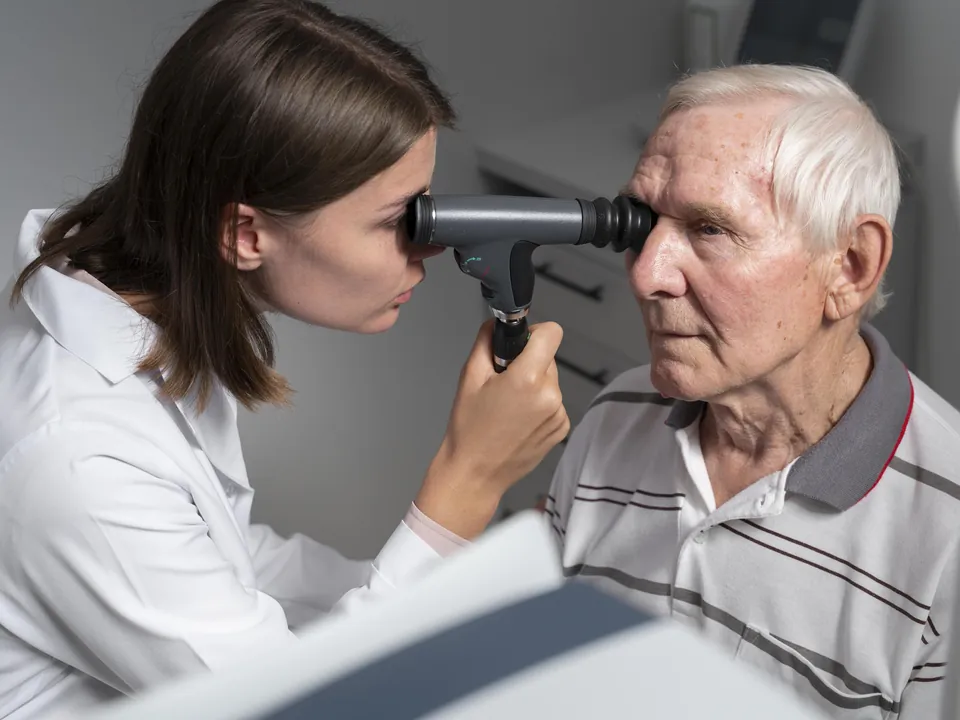
Your visit begins with a comprehensive medical eye examination to determine whether cataracts are affecting your vision and to assess your overall eye health.
Review Your Symptoms:
We discuss changes in your vision, medical history, and how cataracts may be affecting your daily activities.
Examine Your Eyes:
Your ophthalmologist evaluates your cataracts and checks for other eye conditions that could affect your vision or treatment options.
Discuss Your Options:
We explain our findings and help you determine whether continued monitoring or cataract surgery is appropriate.
If surgery is recommended, additional testing and precise eye measurements are performed to help select the most appropriate intraocular lens for your eyes.
Choosing the Right Lens for Your Vision
During cataract surgery, your cloudy natural lens is replaced with a clear artificial lens called an intraocular lens (IOL).
Our surgeons offer a variety of lens options, including standard monofocal lenses, astigmatism-correcting lenses, and advanced technology lenses designed to address different visual needs.
Your surgeon will discuss the benefits and limitations of each option, taking into consideration your eye health, lifestyle, and vision goals. Together, you'll determine which lens is most appropriate for you, including what to expect regarding the need for glasses after surgery.
What to Expect From Cataract Surgery
Cataract surgery is typically a brief outpatient procedure. Your surgeon removes the cloudy natural lens through a small incision and replaces it with a clear artificial lens. Most patients return home the same day.
After surgery, you'll use prescribed eye drops and attend follow-up appointments so we can monitor your healing. Many patients notice improved vision within the first few days, although recovery varies and complete healing takes longer. Depending on your lens selection and individual needs, you may still require glasses for certain activities.
Why Choose Lowcountry Eye Specialists for Cataract Surgery?
At Lowcountry Eye Specialists, our board-certified ophthalmologists provide advanced cataract surgery with a focus on each patient's individual vision needs. From evaluating your cataracts to discussing lens options and planning your procedure, our team takes the time to help you understand your choices and feel confident in your care.
As an independent, physician-owned practice, we're committed to providing personalized attention and coordinated care throughout your surgical experience, from your initial consultation through recovery and follow-up.
FAQs
Surgery is usually considered when cataracts interfere with daily activities such as driving, reading, or working. Your ophthalmologist will help you decide on the right timing.
Cataract surgery is medical eye care, and we accept many major medical plans, including Medicare. Coverage varies by plan, and some advanced lens options may involve additional costs. We do not participate in vision plans.
Your surgeon uses anesthesia to keep you comfortable, and our team will explain what to expect before your procedure.
It depends on your eyes and the lens you choose. Some lens options can reduce your dependence on glasses, but many patients still use them for activities such as reading.
Cataract surgery itself is typically completed in a relatively short time, although you'll spend additional time at the surgical facility for preparation and recovery. Your surgical team will explain what to expect on the day of your procedure.
Cataract surgery is commonly performed on one eye at a time, allowing your surgeon to evaluate healing and visual improvement before proceeding with the second eye. Your surgeon will discuss the appropriate timing for your individual situation.
Take the Next Step Toward Clearer Vision
If cataracts are affecting the way you see, our team is here to help. Contact our Ladson office to schedule a cataract evaluation.